


Collecting candy is fun, but add discovery and it’s cool!
Looking for Halloween activities to do with your kids? I’ve scoured the web for you to select my 4 favorites based on their fun, delicous and educational factors! This will entertain the kids until the trick n’ treating!
4 Scientasty Recipes

The transformation of a cristalline solid into glass… what you want me to eat glass?
Not quite because glass, by definition, is usually made of inorganic molecules (like silica sand). Here we use sugar, which is an organic molecule (which contains carbon). But the process is similar. We take crystals, in this case sugar (and dissolved sugar, corn syrup), and melt them. These crystals become liquid, then viscous, then as they solidify, you get a hard substance with a shiny and smooth surface.
The HUGE difference? glass melts at 1700 degrees Celsius (1490 Farenheit)!
Sugar is much safer to make at home! But be careful and wear adequate protection, you can still seriously burn yourself if you are not careful.
What’s the difference?
By definition, a glass is defined as a material that is:
- non-crystalline, without a specific shape
- usually transparent
- Brittle (although really strong glass exists)
- Can be poured, formed, molded
- High tensile strength > cannot be stretched easily
Where our sugar glass differs greatly:
Resistant to chemicals: your sugar glass will even dissolve in water and fortunately for you, otherwise digestion would be pretty difficult!
Have you ever made sugar glass at home? Only 4 ingredients needed… But it will not replace your windows, unless you are the witch from Hansel and Gretel.

With glass, fake blood, your imagination can probably create something quite spooky, but here is a recipe for inspiration…

The reaction
A crucial step in creating the sponge toffee is adding baking soda. The reaction that occurs when baking soda is added is actually quite simple. It is important not to confuse this reaction with the popular acid-base experiment often done with vinegar or another acid.
Here, the reaction is caused simply by the transformation of the baking soda molecule with heat. This is a well-known reaction in baking: bicarbonate is added to make a cake rise because with heat, carbon dioxide is released and remains trapped in the dough.
Below, you can see the reaction…
| NaHCO3 | ———————-> | Na2CO3 + H2O+ CO2 |
| Sodium bicarbonate | Heat (starting at 80 degrees Celsius) | Sodium carbonate + water + carbon dioxide (the same gas you exhale) |
Here is the balanced reaction…
What is this? Well, this helps you understand the number of molecules in the reaction. When a reaction is balanced, you will find the same number of molecules on each side of the arrow. Here you can see that it takes two molecules of bicarbonate to result in one molecule of carbon dioxide!
2 NaHCO3 > Na2CO3 + H2O + CO2

In this section, we recommend letting the kids do their own experiments…it’s much more fun than following a recipe!
1. The perfect mix
- Start with small amounts to avoid waste.
- Possible ingredients to get the color right: food coloring, red juice (cherry, cranberry, etc), chocolate syrup or cacao powder.
- For texture: cornstarch, corn syrup.
- If you intend to put them in vampires’ mouths, you can put vanilla or maple syrup for the taste.
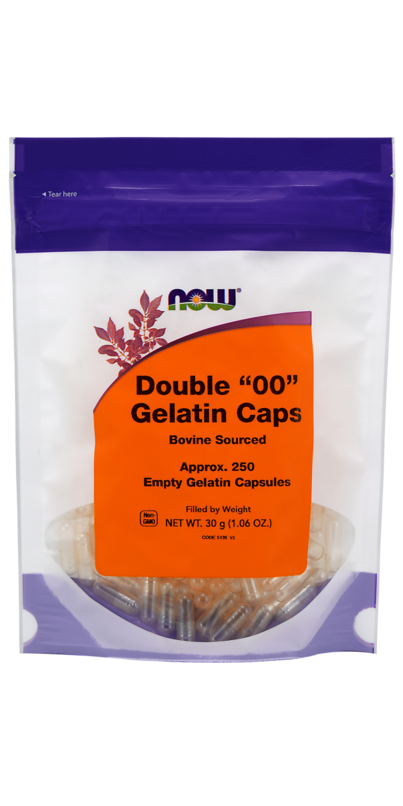
- For the special effect of blood dripping from the mouth at the right time, you can get empty capsules to fill with fake blood.
2. Experiment “How to remove food coloring stains”
Stain removal involves testing different products to achieve the best result. Adult supervision is essential and THE MOST ESSENTIAL RULE to teach is that you should never mix two chemicals, so avoid putting two products used to stain together.
So the experimental procedure could be…
- Take a piece of white fabric that no one cares for.
- Tear the cloth into a few pieces (= the number of products you will test).
- Put some fake blood stains on each piece and let it dry overnight.
- Select your stain removers and prepare your protective equipment: gloves, safety glasses and work in a well ventilated area.
- Products you can use: soap, detergent, vinegar, diluted bleach, rubbing alcohol, salt, baking soda.
- On your stains, get set, go!
Calculate 4 hours from the beginning to the time you plan to eat them.
Ingredients
- 2 egg whites
- 1/2 cup of sugar (the finer, the better, as it dissolves more easily)
- ¼ teaspoon of cream of tartar or ½ teaspoon of lemon juice
- A few chocolate chips
Tools needed
- Mixing bowl (glass or metal)
- Blender
- Spatula
- Baking sheet
- Wax paper
Instructions
- Beat egg whites until foamy.
- Add sugar one spoonful at a time while continuing to beat.
- Continue beating until stiff, glossy peaks form.
- Place wax paper on a baking sheet.
- Using a spoon (or pastry bag), form your ghosts on the baking sheet.
- Add the eyes (2 chocolate chips per ghost).
- Bake for one hour at 200°F
- Then turn off the oven but leave the meringues in for another hour.
The recipe gives about a dozen ghosts. Chocolate chips can be replaced by raisins.
Making meringues involves some important scientific concepts:
1. It is important to be carefully separate the egg whites from the yolk. This is because only the yolk contains fat and fat can completely prevent your meringue from foaming.
2. It is recommended to use a metal or glass bowl. Plastic can sometimes retain oils that can also affect your meringue. In an ideal world, a copper bowl would be perfect as copper encourages foam to form.
3. Temperature of the eggs: cold eggs will be easier to separate and make a more stable meringue. Room temperature eggs will create a meringue faster and it will be lighter.
4. Egg whites are mostly water and proteins. Watch the video below to see how a protein is made: molecules (amino acids) are added in a chain and the different parts stick together by attracting each other, as the chain grows, forming a tight-kint molecule.
When you beat the eggs, the usually tightly packed protein molecules unravel (denature) and take up more space. Also, as they denature, the elements that make up the proteins (the amino acids) repel and attract each other and become entangled, trapping air bubbles. The added sugar encourages this and the cream of tartar is an acid that makes it even more stable.
5. Beating just the right amount: the danger with a meringue is to beat the eggs too much so that the proteins that intermingle do so too tightly and lose their trapped air. But don’t worry, the solution is simple: add another egg white!
6. If you can, avoid making meringues on very humid days or places. The humidity in the air can be absorbed and affect your meringues.
Navigate the sections by selecting the tabs on the left.
